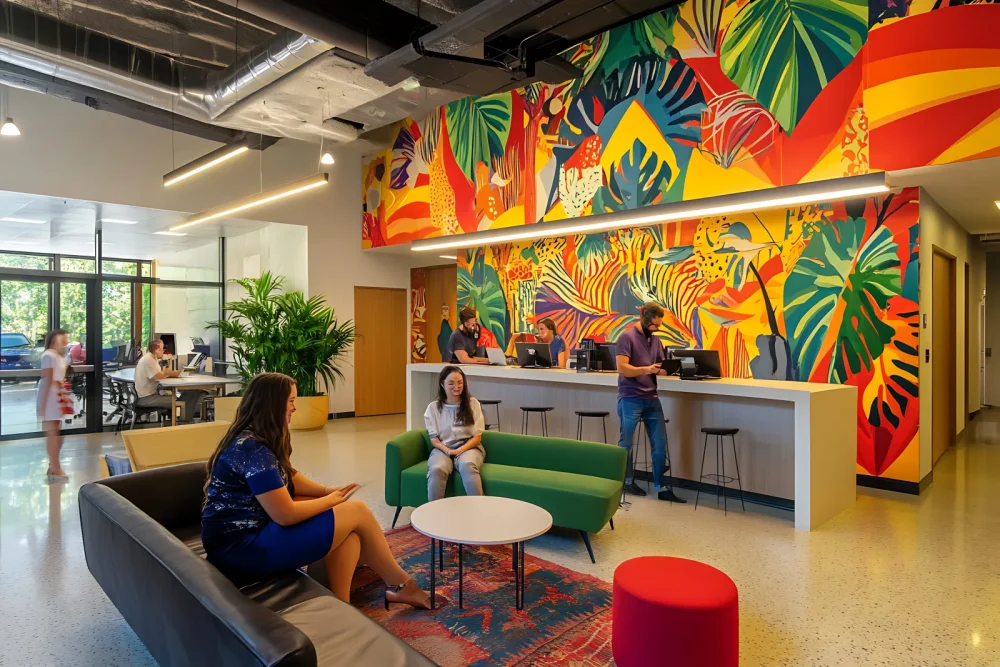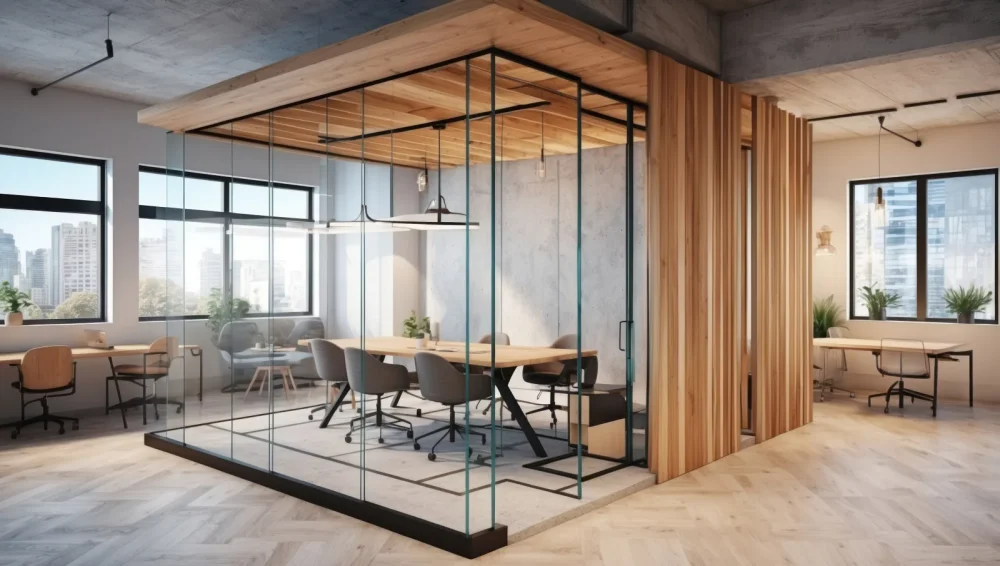
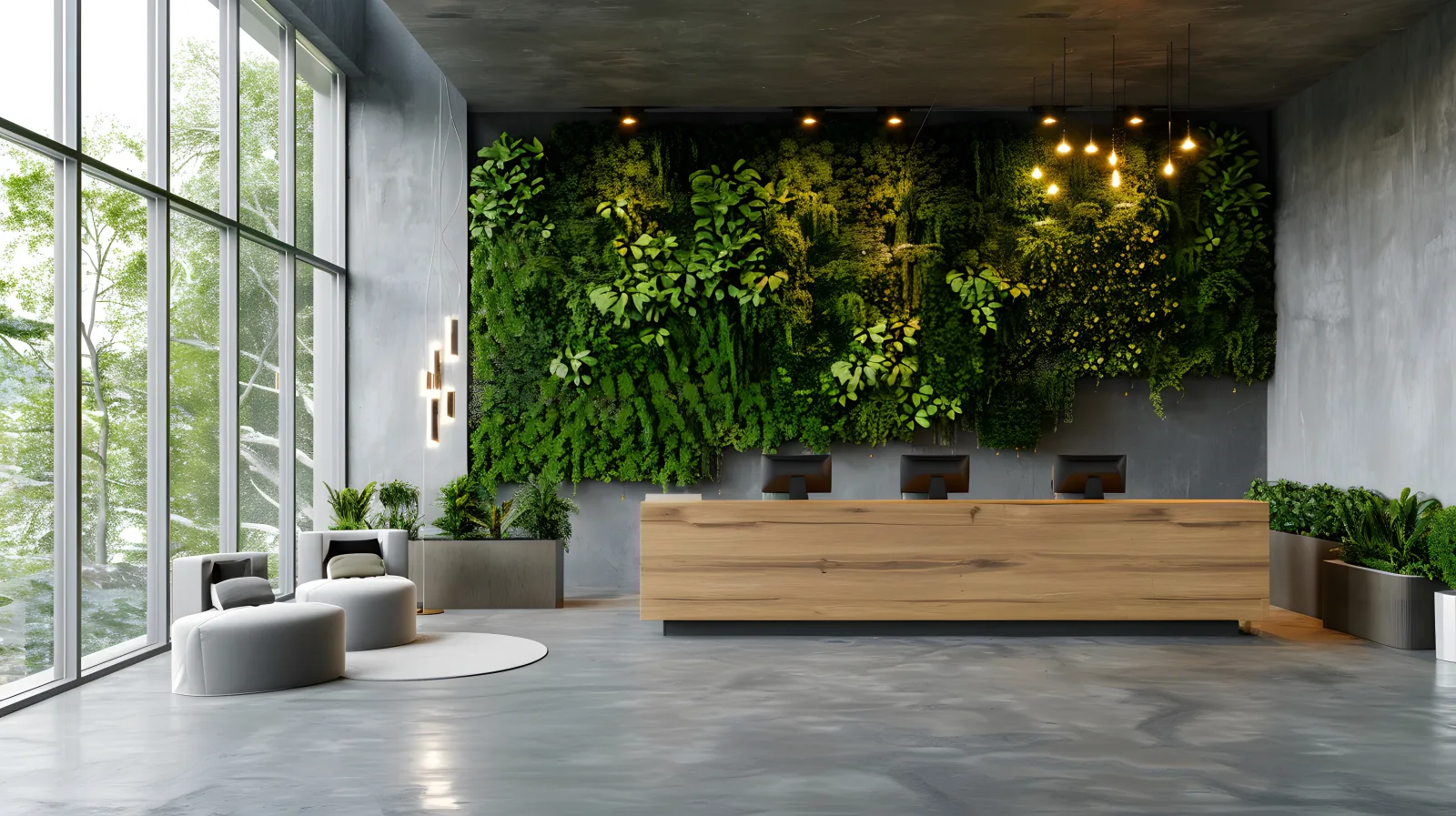
The green element in the design significantly reduces negative effects on users
In a study conducted in several countries across the EMEA region, the main research findings are shared:
- The most commonly used colors in the office are white and gray;
- Only 45% of surveyed employees have live plants in their office;
- 47% of respondents do not have a window with a view of the outside in their workspace;
- 30% of employees said that their workspace seemed neither bright nor spacious;
- One third (33%) of respondents indicated that they did not have a quiet space to work when they were in their office;
- 40% of employees said they felt more productive in an office where they are alone;
- 31% of respondents said they felt more productive in an office set up in an open space.
In the hope of demonstrating the instinctive and undeniable link between humans and nature, biophilic design suggests introducing green elements into workspaces as a significant component of worker performance, highlighting the human love for nature, as well as the reproduction of attitudes and emotions found in nature.
The office, in its general definition, is a production space; its evolution today allows us to observe user behavior within organizations and identify various trends. The introduction of the “green element”—plants—reminds us how vital it is to return to the fundamentals: the connection between humans and nature, and to their very source, even in a workspace. But ultimately, what does this signify?
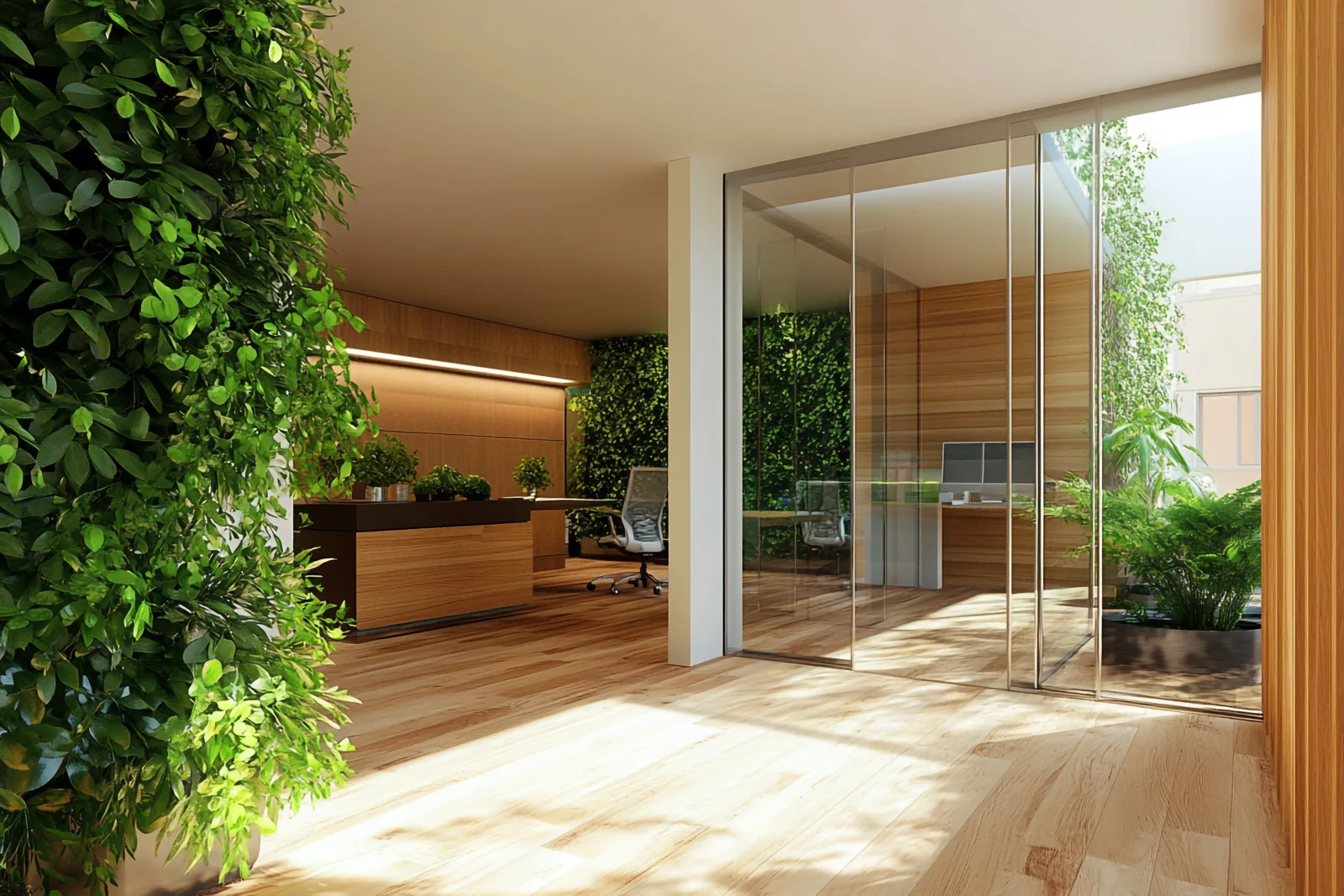
This study indeed marks a turning point where the absence of nature in built interiors must be excluded from designs for the user’s well-being.
It goes without saying that all the criteria and conditions for a pleasant and comfortable working environment must be met.
It is in natural spaces that humans flourish most; the challenge now is to find a balance by bringing nature into the office to consistently revive these experiences for users. By imitating natural settings in workspaces, the perception of work changes; daily experiences become different, attractive, and pleasant, ultimately influencing performance.
Ultimately, we spend more time at work than at home! Human ingenuity must be able to reconnect with nature, wherever it may be.
Biophilic design would then be one of the answers helping to transform the company from a place of production to a place of human and social experience.
*Zone EMEA : Europe, Moyen-Orient, Afrique
Data source: Human Spaces Report